













A light, creamy goat's cheese mousse with exceptional stability and endless presentation possibilities.
Goat’s Cheese Mousse
Elegant yet incredibly versatile, this goat’s cheese mousse recipe offers a refined way to transform cheese into a lighter, more delicate preparation. Whether served as a plated starter, piped canapé, spread for breads and crackers, or paired with seasonal produce, it delivers all the flavour of the original cheese in a smooth, aerated format.
This recipe uses goat's cheese as the base, creating a mousse with a clean, tangy profile and luxurious texture. Combined with UltraGel 5, the result is a mousse that is rich and creamy while retaining excellent stability and presentation flexibility.
Stability & Presentation
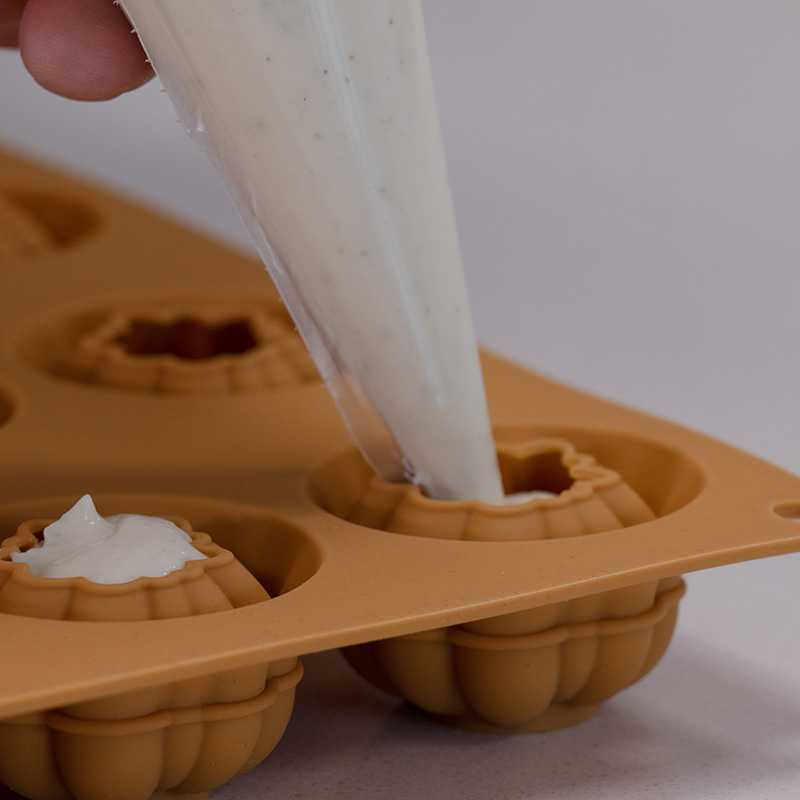
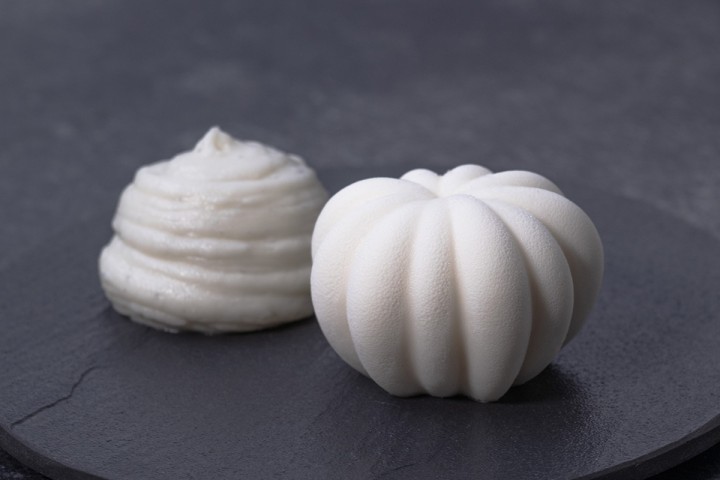
One of the key advantages of incorporating UltraGel 5 into this mousse is the stability it provides without sacrificing delicacy. The mousse holds its shape beautifully over time, resisting collapse and allowing for far greater freedom in presentation than would otherwise be possible without a stabilising system.
Whether piped, quenelled, or moulded into more intricate forms ahead of service, the mousse maintains clean definition and structure, making it particularly suited to refined plated presentations and canapé applications.
Why use UltraGel 5?
Traditionally, many cheese mousses rely on gelatine for stability. While effective, gelatine limits the suitability of the dish for vegetarian diners and can introduce a slight elasticity to the finished texture.
UltraGel 5 provides a plant-based alternative, allowing the recipe to remain fully vegetarian while still delivering excellent stability and freeze-thaw performance. The resulting mousse feels softer and creamier on the palate than many gelatine-based systems, creating a lighter, cleaner eating experience while retaining its ability to hold shape during service.
Beyond Goat's Cheese
While we've chosen goat's cheese for this recipe, the same approach can be adapted to a wide range of cheeses. The flavour profile of the finished mousse will naturally reflect the cheese selected, allowing chefs to create everything from delicate fresh cheese mousses through to richer, more mature cheese-based applications.
When adapting the recipe, fat content should be considered. Higher-fat cheeses will generally require additional milk to maintain the desired mousse texture, while lower-fat cheeses may require less. This flexibility makes the recipe a useful foundation for creating bespoke savoury mousses tailored to different menus and presentations.
Goat’s Cheese Mousse Recipe
Makes: 712g
Ingredients
- 300g goat’s cheese log
- 200g milk
- 200g cream
- 7g UltraGel 5
- 5g Ultralin
Method
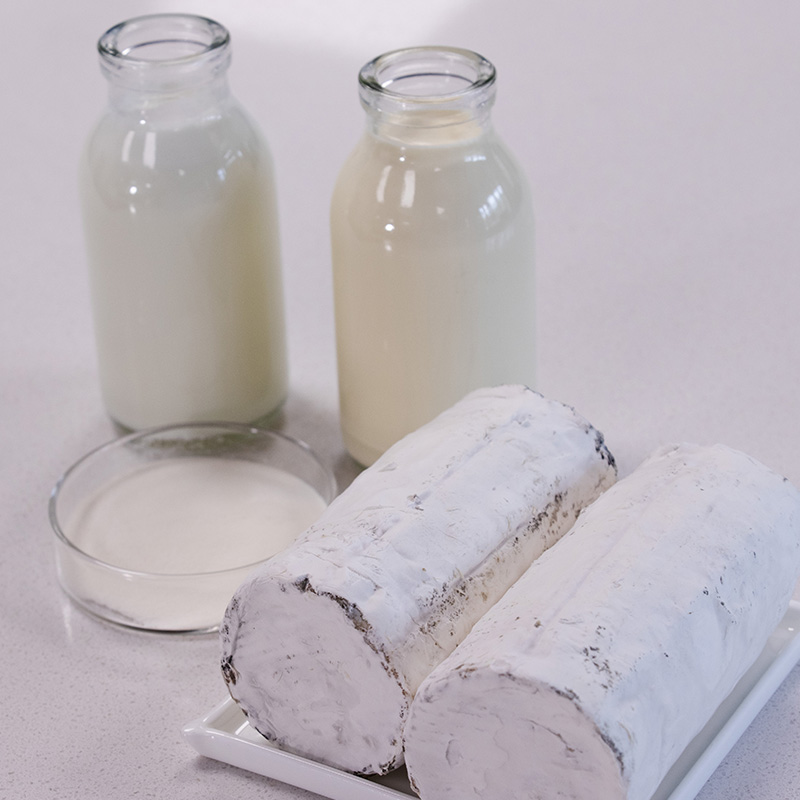
Put the goat's cheese and cream into a Thermomix and set to 70°C.
In a bowl, mix the UltraGel 5 and Ultralin while bringing the milk to 85°C in a pan.
Disperse the powder mix in the pan of hot milk, bringing to the boil and whisking well for 1 to 2 minutes to activate the UltraGel 5.
Pour this into the goat’s cheese and cream mix and adjust the seasoning to taste.
Once combined, pour into desired moulds and freeze until solid.
For a firmer texture, demould and serve.
For a lighter texture, remove from moulds and beat to develop a smooth and light aeration, which can be placed in a iSi whip dispenser or piped.
Notes
To achieve the correct texture and setting properties, UltraGel 5 must be added to a liquid heated above 85°C and then boiled for 1-2 minutes to fully activate its setting properties.
UltraGel is first mixed with Ultralin, as this helps the powder disperse evenly and prevents lumps from forming. You could also use maltodextrin as an alternative.
As Mousses set with UltraGel 5 are completely freeze-thaw stable with no texture or flavour loss. This makes it perfect for jelly coat preparations such as our Vegetarian Goat's Cheese Mousse in Tomato Jelly recipe.
Related Products


Leave a Comment